
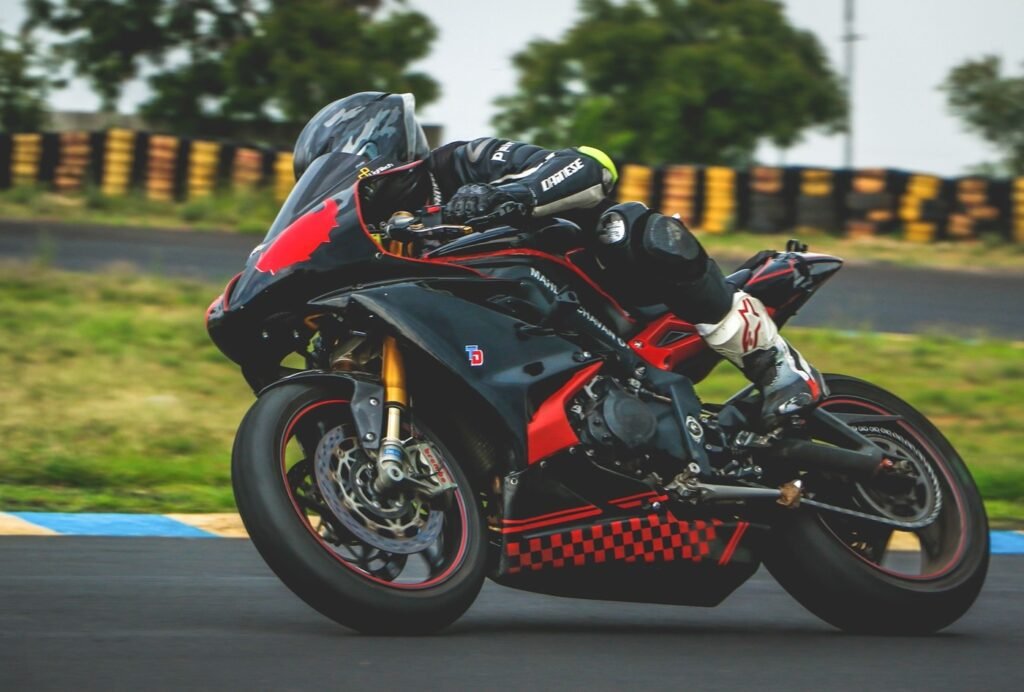
Owning a two-wheeler in India comes with a legal responsibility that many riders overlook until it is too late. Under the Motor Vehicles Act, every bike or scooter used on a public road must carry at least a valid third-party liability policy. Two-wheeler insurance is not merely a compliance formality; it is a financial shield that protects you against accident costs, theft, damage and legal claims that could otherwise drain your savings in a single incident.
The insurance landscape for two-wheelers is regulated by the Insurance Regulatory and Development Authority of India, commonly called IRDAI. This body sets the rules for how policies are priced, how claims are handled and how insurers must treat policyholders. Understanding the basic structure of two-wheeler cover, including mandatory third-party protection and optional own-damage protection, helps you buy the right policy rather than the cheapest one you happen to find online.
For a new rider, the vocabulary alone can feel intimidating. Terms such as Insured Declared Value, No Claim Bonus, zero-depreciation, cashless garages and break-in inspection appear on every quote page but are rarely explained clearly. This guide breaks each concept down in plain language, using realistic Indian examples, so that you can read a policy document with confidence and make decisions based on facts rather than a sales pitch from an agent.
Whether you ride a commuter motorcycle for your daily office trip, a scooter for household errands or a premium bike for weekend rides, the principles of insurance remain the same. What changes is the value of the vehicle, the risk profile and the add-ons that make sense for you. By the end of this guide you will understand what you are buying, what it protects, what it excludes and how to keep your policy active without paying more than you need to.
Recommended Guide

How to Claim Health Insurance: A Step-by-Step Guide
Health Insurance Guide
A clear step-by-step guide to filing cashless and reimbursement health insurance claims in India without the stress.
What Two-Wheeler Insurance Actually Covers
At its core, two-wheeler insurance is a contract between you and an insurer. You pay a premium, and in return the insurer promises to cover certain financial losses linked to your bike. These losses broadly fall into two buckets: liability towards other people or property, and damage to your own vehicle. A basic policy covers only the first, while a comprehensive policy covers both, giving you a far wider safety net for everyday risks on Indian roads.
Third-party liability, which is legally mandatory, pays for injury or death caused to another person and for damage you cause to someone else’s property. Own-damage cover, which is optional but strongly advised, pays for repair or replacement of your own bike after an accident, fire, natural calamity, riot or theft. Together these form the protection that most experienced riders consider essential given how crowded and unpredictable Indian traffic can be.
It is important to know what insurance does not cover as well. Normal wear and tear, mechanical breakdown, damage while riding under the influence of alcohol, and driving without a valid licence are all typical exclusions. Reading the policy wording once, especially the exclusions section, saves you from unpleasant surprises at claim time when you assume something is covered but it is not.
- Third-party injury, death and property damage to others
- Own-damage from accidents, fire and explosions
- Loss due to theft of the insured two-wheeler
- Damage from floods, cyclones, earthquakes and other natural events
- Damage from riots, strikes and malicious acts
- Personal accident cover for the owner-rider
Why Third-Party Cover Is Legally Mandatory
The Motor Vehicles Act makes it a punishable offence to ride a two-wheeler on a public road without at least a third-party liability policy. The logic is social rather than commercial. If your bike injures a pedestrian or damages another vehicle, the victim deserves compensation regardless of whether you can personally afford to pay. Insurance ensures that funds are available, and it protects you from a court-ordered payout that could run into several lakh rupees.
Riding uninsured can lead to a fine, and repeat offences can attract higher penalties or even imprisonment as prescribed under the law. Beyond the legal risk, an uninsured rider personally bears the full cost of any third-party claim, which for serious injury or death can be financially devastating. Third-party premiums are also fixed and revised periodically by IRDAI, so this cover is standardised and affordable across insurers.
Because third-party cover is priced by engine capacity rather than by the value of your bike, a small commuter scooter pays a modest amount while a high-capacity motorcycle pays more. This portion of your premium does not vary much between companies, so the real competition among insurers happens on the own-damage and add-on side of the policy.
Types of Two-Wheeler Insurance at a Glance
This table summarises the main policy types and what each one protects.
| Policy Type | What It Covers | Best Suited For |
|---|---|---|
| Third-Party Only | Injury, death and property damage to others | Old bikes with low resale value |
| Comprehensive | Third-party plus own-damage, theft and calamities | New and mid-life two-wheelers |
| Own-Damage Standalone | Only damage or loss to your own bike | Riders topping up an existing third-party cover |
| Comprehensive with Add-Ons | Full cover plus chosen extras like zero-dep | Premium and daily-commute bikes |
| Long-Term Comprehensive | Multi-year cover in a single policy | Owners wanting fewer renewals |
Recommended Guide
How to Compare Car Insurance Plans and Save Money
Car Insurance Guide
Compare car insurance plans the smart way and cut your premium without losing the cover that matters.
Understanding Insured Declared Value (IDV)
Insured Declared Value is the amount your insurer agrees to pay if your two-wheeler is stolen or damaged beyond economical repair, known as a total loss. It is essentially the current market value of your bike, calculated as the manufacturer’s listed price minus depreciation for age. IDV is not what you paid when the bike was new; it falls each year as the vehicle grows older and its resale value declines.
IDV directly affects your premium. A higher IDV means a larger own-damage payout in a total loss and therefore a slightly higher premium, while a lower IDV reduces both. Some buyers are tempted to declare a very low IDV to save on premium, but this is short-sighted because it also reduces the compensation you receive if the bike is stolen. Choosing an IDV close to fair market value is the balanced approach.
At renewal you can usually adjust the IDV within a range offered by the insurer. As the bike ages, the standard depreciation schedule reduces IDV in defined steps, such as a larger drop in the early years and smaller drops later. Understanding this schedule helps you set realistic expectations about what you would actually receive in the event of theft or a write-off.
No Claim Bonus and How It Rewards Safe Riders
No Claim Bonus, usually shortened to NCB, is a discount you earn on the own-damage part of your premium for every claim-free year. It rewards careful riders by reducing renewal cost. NCB typically starts at a modest percentage after the first claim-free year and rises in steps for each subsequent year without a claim, reaching a substantial maximum after several consecutive clean years.
The important thing to remember is that NCB belongs to you, the policyholder, and not to the bike. If you sell your old two-wheeler and buy a new one, you can transfer the accumulated NCB to the new vehicle’s policy. Similarly, if you switch insurers at renewal, your existing NCB carries over as long as you provide proof from the previous insurer, so you are not penalised for shopping around.
A single claim, however small, usually resets your NCB back to zero at the next renewal. This is why experienced riders often pay for minor scratches and small dents out of pocket rather than claiming, since preserving a high NCB can save more over time than a tiny claim is worth. Weighing the repair cost against the NCB you would lose is a habit worth developing.
- NCB rises with each consecutive claim-free year
- It applies only to the own-damage premium, not third-party
- It is linked to the owner, so it transfers to a new bike
- It carries over when you switch insurers at renewal
- Even one claim usually resets the bonus to zero
- Proof from the previous insurer is needed to transfer it
Recommended Guide
How to Choose the Best Bike Insurance Policy
Two-Wheeler Guide
Everything you need to pick the right two-wheeler insurance policy for your bike, riding needs and budget.
Add-On Covers That Enhance a Basic Policy
A comprehensive policy can be strengthened with add-ons, which are optional covers you pay extra for. The most popular is zero-depreciation cover, which ensures that at claim time the insurer does not deduct depreciation on replaced parts, so you receive a larger settlement. For newer and more expensive bikes, this add-on often pays for itself in a single significant claim involving plastic or fibre parts.
Other useful add-ons include roadside assistance, which arranges help if you break down far from home, and an engine protection cover that pays for engine damage from water ingress or oil leakage, which the base policy usually excludes. A consumables cover pays for items such as engine oil, nuts, bolts and lubricants used during repair, small amounts that add up across a claim.
Add-ons make the most sense for newer, higher-value two-wheelers and for riders who commute daily in heavy traffic or flood-prone cities. For a very old bike with a low IDV, the extra premium for multiple add-ons may not be justified. The right approach is to pick only the add-ons that match your actual riding conditions rather than buying every option on offer.
- Zero-depreciation for full-value parts claims
- Roadside assistance for breakdowns and towing
- Engine protection against water and oil damage
- Consumables cover for oil, nuts and bolts
- Return-to-invoice cover for near-new bikes
- Passenger and enhanced personal accident cover
Cashless Network Garages and How They Work
Most insurers maintain a network of tie-up garages where you can get your two-wheeler repaired on a cashless basis. In a cashless claim, the insurer settles the approved repair amount directly with the garage, and you pay only the deductibles, any depreciation not covered and charges for items outside the policy. This removes the burden of arranging a large sum upfront while your bike is being fixed.
If you prefer or are forced to use a garage outside the network, you can still claim on a reimbursement basis. Here you pay the repair bill yourself, keep all invoices and payment proofs, and then submit them to the insurer, who reimburses the approved portion after assessment. Reimbursement is useful when a network garage is not nearby, but it requires you to fund the repair temporarily.
Before buying a policy, it is worth checking whether the insurer has cashless garages near your home and workplace, especially the authorised service centre for your bike’s brand. A strong local network makes the claim experience far smoother, since you can simply hand over the bike and let the garage coordinate with the insurer on approvals and estimates.
Sample No Claim Bonus Progression
This illustrative table shows how NCB typically grows with each claim-free year.
| Claim-Free Years | Typical NCB Discount |
|---|---|
| After 1 year | Around 20 percent |
| After 2 years | Around 25 percent |
| After 3 years | Around 35 percent |
| After 4 years | Around 45 percent |
| After 5 years | Up to about 50 percent |
Recommended Guide

How to Choose the Best Life Insurance Policy
Life Insurance Guide
A practical guide to choosing a life insurance policy that genuinely protects your family and fits your goals.
Policy Lapse, Break-In Inspection and Renewal
A two-wheeler policy has a fixed validity, and if you do not renew it before expiry the policy lapses. Riding on a lapsed policy is both illegal and financially risky, because any accident during the gap is entirely your own liability. A lapse also puts your accumulated No Claim Bonus at risk, as it is typically forfeited if the break between policies stretches beyond a short grace window.
When a policy has lapsed, insurers usually require a break-in inspection before issuing a fresh cover. A surveyor or an app-based self-inspection checks the current condition of the bike so that pre-existing damage is not passed off as a new claim. Own-damage cover may begin only after this inspection is completed and approved, which is another reason to renew on time rather than let the policy expire.
The simplest way to avoid all of this is to renew before the due date, ideally a few days early. Set a reminder, note the expiry date, and keep proof of your previous NCB handy. Renewing early keeps your cover continuous, protects your bonus and spares you the inconvenience of an inspection and any waiting period for own-damage protection to resume.
- Renew before the expiry date to keep cover continuous
- A lapse beyond the grace period can wipe out your NCB
- Break-in inspection is needed to revive lapsed own-damage cover
- Riding on a lapsed policy is illegal and uninsured
- Keep previous policy and NCB proof ready at renewal
How to Choose the Right Two-Wheeler Policy
Choosing a policy starts with deciding between third-party only and comprehensive cover. If your bike is new or has meaningful resale value, comprehensive cover is almost always the sensible choice because it protects your own vehicle too. For a very old bike whose market value is low, some owners opt for third-party only to stay legal while keeping the premium minimal, accepting that own-damage repairs come out of pocket.
Next, compare quotes on a like-for-like basis. Look beyond the headline premium at the IDV offered, the add-ons included, the claim settlement reputation of the insurer and the density of cashless garages near you. A slightly higher premium with a strong claim record and convenient garages often delivers better value than the cheapest quote with poor service and few network options.
Finally, buy only the add-ons you will realistically use and set an honest IDV. Read the exclusions, understand your voluntary and compulsory deductibles, and confirm the personal accident cover for the owner-rider. Taking fifteen minutes to compare properly, rather than clicking the first offer, is the difference between a policy that merely ticks a legal box and one that genuinely protects you.
Frequently Asked Questions
Is two-wheeler insurance mandatory in India?
Yes, at least a third-party liability policy is legally required for every two-wheeler ridden on a public road under the Motor Vehicles Act. Riding without it can attract a fine and, for repeat offences, harsher penalties. Own-damage cover is optional but strongly recommended. Most riders choose a comprehensive policy that includes both third-party and own-damage protection.
What is the difference between IDV and premium?
IDV is the current market value of your bike that the insurer will pay in a total loss, while the premium is the amount you pay to hold the policy. A higher IDV generally means a slightly higher premium and a larger payout in theft or write-off cases. IDV falls each year with depreciation. You should set it close to fair market value rather than artificially low.
Can I transfer my No Claim Bonus to a new bike?
Yes, NCB is linked to you as the owner and not to the vehicle. When you sell an old two-wheeler and buy a new one, you can transfer the accumulated bonus to the new policy. You can also carry it over when switching insurers at renewal. You will need proof of your existing NCB from the previous insurer to do this.
What happens if my policy lapses?
If you do not renew before expiry the policy lapses, and any accident during the gap becomes your own liability. A lapse beyond the grace period usually forfeits your accumulated NCB. To revive own-damage cover after a lapse, insurers typically require a break-in inspection of the bike. Renewing on time is the simplest way to avoid all of these problems.
Do I really need zero-depreciation cover?
Zero-depreciation cover is most valuable for newer and higher-value bikes with many plastic or fibre parts. It ensures the insurer does not deduct depreciation on replaced parts at claim time, giving you a larger settlement. For an old bike with a low IDV, the extra premium may not be worth it. Match the add-on to your bike’s age and value.
How is a cashless claim different from reimbursement?
In a cashless claim you get your bike repaired at a network garage and the insurer settles the approved amount directly with them, so you pay only deductibles and non-covered items. In a reimbursement claim you pay the bill yourself at any garage and later submit invoices to get the approved amount back. Cashless is more convenient when a network garage is nearby.
Does insurance cover theft of my two-wheeler?
Theft is covered under a comprehensive or own-damage policy but not under a third-party only policy. If your insured bike is stolen you should file a police complaint immediately and inform the insurer. The payout is based on the IDV at the time of loss, after applicable deductions. Keeping your documents and keys secure supports a smooth theft claim.
What is not covered by two-wheeler insurance?
Common exclusions include normal wear and tear, mechanical or electrical breakdown, and damage caused while riding under the influence of alcohol or drugs. Riding without a valid licence or using the bike outside its permitted use is also excluded. Consequential losses and depreciation, unless covered by an add-on, are typically not paid. Reading the exclusions section once avoids surprises at claim time.
Can I buy two-wheeler insurance online?
Yes, most insurers and aggregators let you buy and renew two-wheeler insurance entirely online. You enter your bike details, choose the cover and add-ons, compare quotes and pay digitally to receive an instant policy document. Online purchase is often faster and lets you compare options easily. Always verify the insurer is registered with IRDAI before paying.
How do I choose between third-party and comprehensive cover?
Choose comprehensive cover if your bike is new or still has meaningful resale value, because it protects your own vehicle against accidents, theft and calamities. Third-party only suits very old bikes where the market value is low and you mainly want to stay legal. Comprehensive costs more but offers far wider protection. Weigh your bike’s value and your risk tolerance before deciding.
External Resource

IRDAI – Official Insurance Regulator
Official Resource
Understand your rights as a policyholder, verify registered insurers, and access official resources on the IRDAI website before you decide.
Disclaimer
This page is not affiliated with IRDAI, any insurer, or any government body. Two-wheeler insurance premiums, IDV, add-ons, and terms vary by insurer and vehicle. This content is for general information only and is not professional insurance or financial advice. Always confirm details with an IRDAI-registered insurer or a licensed advisor.
Unlock the content recommendation
Protected connection