
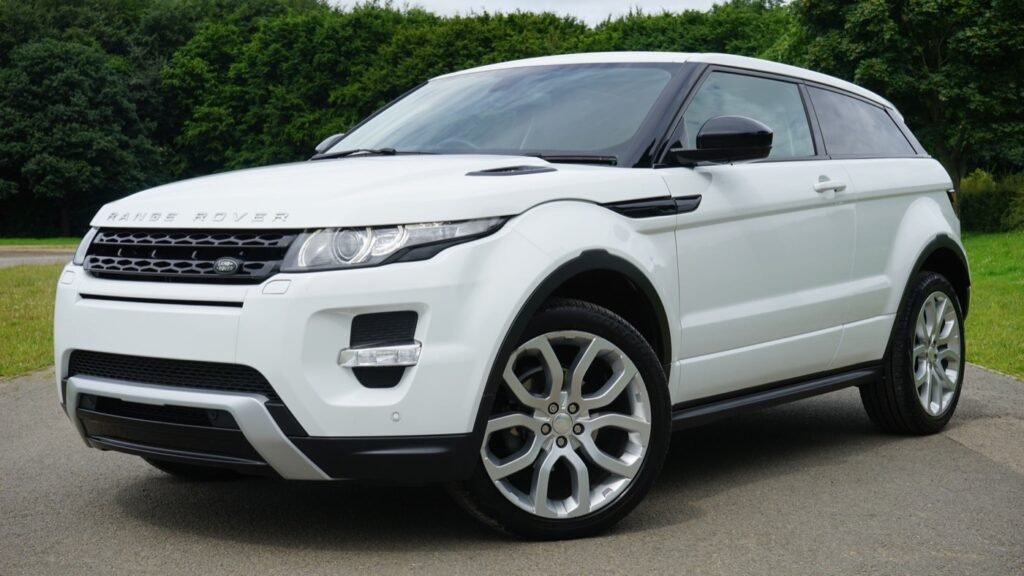
One of the first decisions every Indian car owner faces is choosing between a third-party policy and a comprehensive policy. These two options sit at opposite ends of the coverage spectrum, and picking the wrong one can either leave your car dangerously underprotected or make you pay for cover you do not need. Understanding the real difference between them is the key to a smart insurance decision.
The confusion is understandable because both policies satisfy the legal requirement to have motor insurance under the Motor Vehicles Act. However, satisfying the law and protecting your car financially are two very different things. A third-party policy meets the minimum legal duty, while a comprehensive policy adds a whole layer of protection for your own vehicle that the law does not force you to buy.
This article compares the two side by side, looking at what each covers, what each leaves out, how their premiums differ, and how factors like the Insured Declared Value and No Claim Bonus fit in. It is written for Indian owners and uses India-specific concepts regulated by IRDAI, so the guidance reflects real conditions on Indian roads rather than generic global advice.
By the end, you will be able to match the right policy to your specific situation, whether you own a brand-new SUV, a mid-life family sedan, or an old hatchback nearing the end of its life. The goal is not to push you toward the most expensive plan, but to help you weigh cost against risk and choose the cover that genuinely fits your car and your budget.
Recommended Guide

How to Claim Health Insurance: A Step-by-Step Guide
Health Insurance Guide
A clear step-by-step guide to filing cashless and reimbursement health insurance claims in India without the stress.
What a Third-Party Car Insurance Policy Actually Covers
A third-party policy is the most basic form of motor insurance and the minimum required by law. The name comes from the three parties involved in an accident: you the insured, the insurer, and the third party who suffers loss because of your vehicle. This policy pays for injury, disability or death caused to that third party, and for damage to their property or vehicle up to a defined limit.
Crucially, a third-party policy does not pay for any damage to your own car, nor for your own injuries as the driver. If you crash into a wall, your bumper is dented in a collision, or your car is stolen, a third-party only policy offers you nothing toward those losses. Its entire purpose is to protect other people from the financial consequences of your driving.
The premium for third-party cover is fixed each year by IRDAI and depends on your car’s engine cubic capacity, so it is the same across all insurers. Because it is inexpensive and legally sufficient, it appeals to owners of old, low-value vehicles where the cost of insuring the car itself would outweigh the benefit.
- Pays for injury or death caused to other people
- Covers damage to a third party’s property or vehicle
- Does not cover any damage to your own car
- Does not cover your own injuries as the driver
- Premium fixed by IRDAI based on engine capacity
What a Comprehensive Car Insurance Policy Adds
A comprehensive policy includes everything a third-party policy offers and then adds own-damage cover, which protects your own vehicle. This means repairs after an accident, losses from fire, theft of the car, damage from natural disasters like floods, storms and earthquakes, and even man-made events such as riots and vandalism are all covered, subject to the policy terms and applicable deductibles.
Because it protects your own asset, a comprehensive policy is built around the Insured Declared Value of your car. In a total loss such as theft or a write-off, the insurer pays up to the IDV. For partial damage, it pays for repairs after applying depreciation on replaced parts and your compulsory deductible. This makes it far more meaningful protection for anyone with a valuable vehicle.
Comprehensive policies also allow you to attach add-on covers such as zero depreciation, engine protection, roadside assistance and return to invoice, which fine-tune the protection to your needs. This flexibility is a major reason comprehensive cover is the popular choice for newer cars, letting owners tailor a policy that matches how and where they drive.
- Includes all third-party liability protection
- Covers own-damage from accidents and collisions
- Covers theft, fire, floods and other natural events
- Pays up to the IDV in a total loss
- Can be extended with useful add-on covers
Side-by-Side Coverage Comparison
This table lays out the key coverage differences between third-party and comprehensive car insurance.
| Coverage Element | Third-Party | Comprehensive |
|---|---|---|
| Third-party injury and death | Covered | Covered |
| Third-party property damage | Covered | Covered |
| Own car accident damage | Not covered | Covered |
| Theft of your car | Not covered | Covered |
| Fire and natural disasters | Not covered | Covered |
| Add-on covers available | No | Yes |
Recommended Guide
How to Compare Car Insurance Plans and Save Money
Car Insurance Guide
Compare car insurance plans the smart way and cut your premium without losing the cover that matters.
The Cost Difference Between the Two Policies
The price gap between third-party and comprehensive cover is significant because they protect very different things. Third-party premium is a fixed, regulated amount tied only to engine capacity, making it the cheapest legal option. Comprehensive premium is higher because it adds the own-damage component, which is priced on the car’s IDV, model, age and location, and it varies from insurer to insurer.
However, the higher comprehensive premium buys protection that can be worth many times its cost. A single major accident or a stolen car can cost several lakh rupees, an amount that dwarfs the annual premium difference. When you view insurance as risk transfer rather than an expense, the comprehensive premium often looks like reasonable value for the peace of mind it delivers.
It is also worth remembering that comprehensive premiums fall over time thanks to the No Claim Bonus and the natural decline in IDV as the car ages. So while comprehensive starts more expensive, careful claim-free driving steadily narrows the gap, and the extra cost becomes easier to justify for anyone who wants their own car protected.
Which Policy Suits Which Type of Car Owner
The right choice depends heavily on your car’s age and value. For a brand-new or fairly new car worth several lakh rupees, comprehensive cover is strongly advisable because the potential loss from an accident or theft is large. The relatively small extra premium protects a big asset, and add-on covers can further reduce out-of-pocket costs on repairs.
For an older car that has depreciated heavily, the calculation shifts. If the IDV has fallen to a modest figure, the own-damage payout in a total loss would be small, so some owners of very old cars choose third-party only to save on premium. This is a reasonable trade-off when the car’s remaining value no longer justifies paying for own-damage cover.
Your driving environment and habits also matter. If you drive daily in dense city traffic, park on the street, or live in a flood-prone area, comprehensive cover with the right add-ons makes strong sense. If the car is rarely used and old, minimal cover may suffice. The decision is ultimately a balance between the car’s value and your exposure to risk.
- New or high-value cars: comprehensive strongly advised
- Very old, low-IDV cars: third-party may be enough
- Daily city driving: comprehensive plus add-ons
- Flood-prone areas: comprehensive with engine cover
- Rarely used old cars: minimum legal cover can suffice
Recommended Guide
How to Choose the Best Bike Insurance Policy
Two-Wheeler Guide
Everything you need to pick the right two-wheeler insurance policy for your bike, riding needs and budget.
Common Exclusions That Apply to Both Policies
Neither policy covers everything, and knowing the exclusions prevents disappointment at claim time. Both third-party and comprehensive policies exclude losses caused by driving under the influence of alcohol or drugs, driving without a valid licence, and using a private car for commercial hire when it is insured only for personal use. These conditions can void a claim entirely.
Comprehensive policies additionally exclude normal wear and tear, mechanical or electrical breakdown, and gradual depreciation, since these are maintenance matters rather than sudden accidents. Consequential damage, meaning secondary damage that follows from an initial incident, is often excluded too. For example, driving a flooded car and seizing the engine is usually not covered without a specific engine protection add-on.
There are also geographic and usage limits. Standard policies cover use within India, and damage occurring outside the permitted area or from an illegal activity is excluded. Reading the exclusions section of your policy wording once, before you buy, gives you a realistic picture of what protection you truly have and where you may need an add-on.
- Driving drunk or without a valid licence
- Normal wear, tear and mechanical breakdown
- Depreciation on parts in standard claims
- Consequential engine damage after flooding
- Using a private car for commercial purposes
- Damage outside the policy’s geographic area
How IDV and No Claim Bonus Differ in Each Policy
The Insured Declared Value is central to a comprehensive policy but largely irrelevant to a third-party only policy. In comprehensive cover, IDV sets the maximum payout for theft or total loss, so choosing a fair IDV is important. A third-party policy has no own-damage payout, so there is no IDV to declare and the concept simply does not apply to that portion.
No Claim Bonus also behaves differently. The NCB discount applies to the own-damage part of the premium, so it directly benefits comprehensive policyholders who drive claim-free. Since a pure third-party policy has no own-damage premium, the traditional NCB discount does not reduce its cost in the same way, although your claim-free record still carries value when you upgrade to comprehensive later.
This is one more reason many owners prefer comprehensive cover: it rewards safe driving with growing discounts year after year, effectively lowering the long-term cost. If you switch from third-party to comprehensive when buying a newer car, be sure to understand how your accumulated record and any transferable bonus will be treated by the new insurer.
Choosing Based on Car Age and Value
Use this quick guide to see which policy typically fits different car profiles.
| Car Profile | Suggested Policy | Reason |
|---|---|---|
| Brand-new car | Comprehensive with add-ons | High value to protect |
| 3 to 6 year old car | Comprehensive | Still holds meaningful value |
| 7 to 10 year old car | Comprehensive or third-party | Depends on usage and IDV |
| Over 10 years, low value | Third-party | Own-damage payout would be small |
| Rarely used old car | Third-party | Meets law at lowest cost |
Recommended Guide

How to Choose the Best Life Insurance Policy
Life Insurance Guide
A practical guide to choosing a life insurance policy that genuinely protects your family and fits your goals.
How to Upgrade From Third-Party to Comprehensive Cover
If you currently hold a third-party only policy and want fuller protection, you can switch to comprehensive cover at renewal or, in many cases, by buying a standalone own-damage policy alongside your existing third-party cover. This flexibility, encouraged by IRDAI reforms, lets you add own-damage protection without necessarily waiting for both covers to expire together.
When upgrading, the insurer will usually require details of your car and may arrange an inspection, especially if there has been a gap in own-damage cover. You will need to decide on the IDV and any add-on covers you want. Take time to compare quotes, because the own-damage premium varies between insurers even though the third-party portion is fixed by IRDAI.
Upgrading makes the most sense while your car still holds substantial value and you rely on it regularly. Once you move to comprehensive cover, maintain a claim-free record where possible to build up your No Claim Bonus, and review your add-ons each year so the policy continues to match your car’s age and your driving pattern.
- Switch at renewal or add a standalone own-damage policy
- Expect a possible inspection after an own-damage gap
- Decide on a fair IDV before finalising
- Compare own-damage quotes across insurers
- Build No Claim Bonus once on comprehensive cover
Making the Final Decision With a Simple Checklist
To decide between the two, start by asking what your car is worth today and how much a total loss would hurt you financially. If losing the car would be a serious blow, comprehensive cover is the sensible choice. If the car is old and its market value is small, the cheaper third-party option may be a rational way to meet the legal requirement without overpaying.
Next, weigh how and where you drive. Heavy city traffic, night parking on the road, and living in an area prone to flooding all increase the odds of own-damage, tilting the balance toward comprehensive cover with suitable add-ons. Light, occasional use of an older vehicle points the other way. Your personal comfort with paying repair bills out of pocket also matters.
Finally, look at the numbers together rather than in isolation. Compare the comprehensive premium after applying your No Claim Bonus against the realistic cost of the risks you face. For most owners of cars that still hold value, comprehensive cover offers protection that clearly justifies its price, while third-party only remains a legitimate choice for genuinely low-value vehicles.
- Ask how much a total loss would cost you
- Factor in traffic, parking and flood risk
- Consider your comfort with paying repair bills
- Compare premiums after applying your NCB
- Match the policy to the car’s current value
Frequently Asked Questions
Is third-party insurance enough for my car?
Third-party insurance is legally enough to drive on Indian roads, but it does not protect your own car at all. It only pays for injury or damage you cause to others. For a new or valuable car, this leaves you exposed to large losses from accidents, theft or floods. It is generally suitable only for old, low-value vehicles where own-damage cover is not worthwhile.
Why is comprehensive insurance more expensive?
Comprehensive insurance costs more because it adds own-damage protection on top of third-party liability. This own-damage portion is priced on your car’s IDV, model, age and city, and it covers accidents, theft, fire and natural disasters. The extra premium reflects the much wider protection you receive. Over time, the No Claim Bonus and falling IDV help reduce the comprehensive premium.
Does third-party insurance cover my own injuries?
No, a third-party policy does not cover your own injuries as the owner-driver. It only pays for injury or death caused to other people. However, a separate compulsory personal accident cover for the owner-driver is usually required and can be bought alongside any policy. For wider protection of yourself and passengers, additional personal accident add-ons are available.
Can I add zero depreciation to a third-party policy?
No, add-on covers like zero depreciation apply only to the own-damage portion of a policy, which a pure third-party plan does not have. To use such add-ons, you need a comprehensive policy or a standalone own-damage policy. Add-ons enhance how your own car’s repairs are settled, so they are irrelevant to third-party only cover. Upgrading to comprehensive unlocks these options.
How do I know if my car still needs comprehensive cover?
Look at your car’s current IDV and ask how much a total loss would cost you financially. If the car still holds substantial value and you rely on it, comprehensive cover is sensible. If the IDV has dropped very low with age, the own-damage payout would be small and third-party may be enough. Your driving conditions and risk comfort also influence the decision.
Is the third-party premium the same across all insurers?
Yes, the third-party premium is fixed each year by IRDAI and depends only on your car’s engine cubic capacity. This means it is identical no matter which insurer you choose. The own-damage premium in a comprehensive policy, however, varies between insurers. So comparing quotes matters for comprehensive cover but not for the third-party portion.
Can I switch from comprehensive back to third-party?
Yes, you can choose a third-party only policy at renewal if you decide own-damage cover is no longer worth it, for example on a very old car. Keep in mind you will lose protection for your own vehicle and the benefit of your No Claim Bonus on own-damage premium. Weigh the car’s current value before downgrading. Many owners keep comprehensive cover as long as the car holds value.
Does comprehensive insurance cover flood damage?
Comprehensive insurance covers damage from natural disasters including floods for the body of the car. However, engine damage caused by trying to start or drive a flooded car is often excluded and needs a separate engine protection add-on. This is an important distinction in flood-prone areas. Reading the policy exclusions helps you decide whether to add engine cover.
What happens to my NCB if I only have third-party cover?
The No Claim Bonus discount applies to the own-damage premium, which a pure third-party policy does not have, so it does not reduce third-party cost directly. That said, keeping a claim-free record still holds value if you later upgrade to comprehensive cover. When you move to comprehensive, discuss how your record will be treated with the new insurer. Careful driving always pays off eventually.
Can I buy own-damage and third-party from different insurers?
Yes, following IRDAI reforms you can hold a standalone own-damage policy from one insurer and a third-party policy from another. This unbundling gives you flexibility to shop for the best own-damage terms while meeting the legal third-party requirement. Many owners still prefer a single comprehensive policy for simplicity. Either approach is valid as long as both covers remain active.
External Resource

IRDAI – Official Insurance Regulator
Official Resource
Understand your rights as a policyholder, verify registered insurers, and access official resources on the IRDAI website before you decide.
Disclaimer
This page is not affiliated with IRDAI, any insurer, or any government body. Motor insurance premiums, IDV, add-ons, and terms vary by insurer and vehicle. This content is for general information only and is not professional insurance or financial advice. Always confirm details with an IRDAI-registered insurer or a licensed advisor.
Unlock the content recommendation
Protected connection